Key Takeaways
Smart vending machines use digital technology and cashless payment systems, whereas traditional vending machines rely on manual replenishment and cash transactions only.
The latest technology incorporated into vending machines helps to track the stock in real time, eliminating stock-outs and potential losses.
Cashless vending machines allow customers to pay by tapping, using mobile wallets, or scanning QR codes.
The automated retail technology applied in smart vending machines can decrease overall expenses in the long run.
Businesses switch to smart vending machines for better customer service, sales data collection, and increased profits.
Over the decades, vending machines have served customers worldwide; however, the industry has undergone significant changes recently.
What was once considered a simple box for dispensing items in exchange for coins has become a high-tech, automated vending system. With current technological advances, customers want a vending machine to offer as much convenience as a shopping app or self-service terminal would.
So, to avoid losing customers, businesses need to switch to vending machines with more advanced capabilities.
Nowadays, there is a clear choice between traditional and smart vending machines for any business considering them, and understanding the key differences between the two is crucial to making an informed decision.
Providers like FreshVendCLT have watched this shift happen up close, supplying businesses with smart machines built around the same connected features covered in this guide.
Here's a closer look at how the two types compare and what that means for your bottom line.
Table of Contents
What Is a Traditional Vending Machine?
What Is a Smart Vending Machine?
How Do Smart Vending Machines Work?
Smart Vending Machine Comparison at a Glance
Which One Is Right for Your Space?
FAQs
What Is a Traditional Vending Machine?
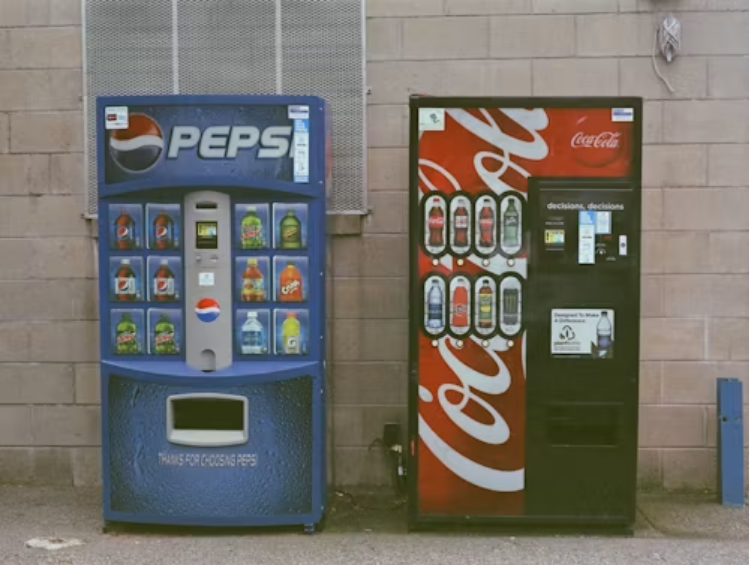
A traditional vending machine is a mechanical/electronic machine that releases goods after receiving money from the customer. This type of vending machine does not include features such as automatic restocking, automatic price changing, and automatic data gathering.
Hence, it requires physical observation by employees to monitor the machine's inventory and operation. It works well for simple operations but offers little flexibility and does not allow remote monitoring.
What Is a Smart Vending Machine?
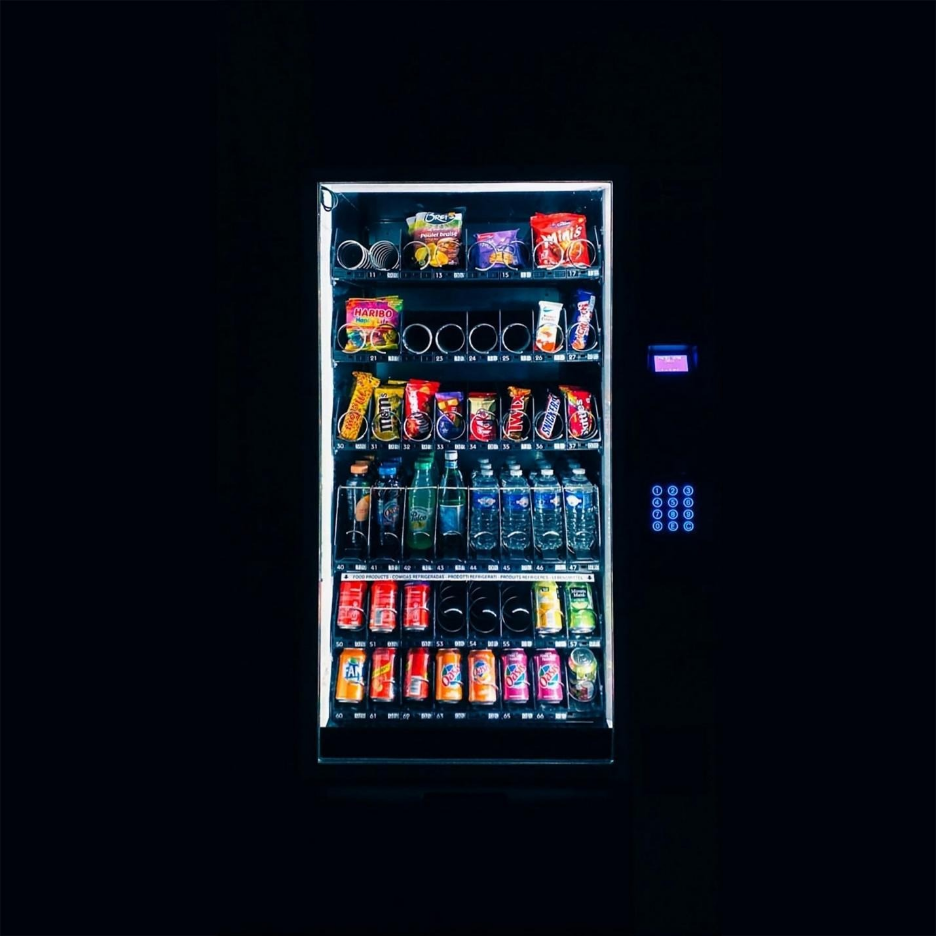
A smart vending machine is a connected, upgraded version of the classic vending unit, built around the latest vending technology and internet connectivity.
Smart vending machines use touchscreens, sensors, and cloud software to automate sales, payments, and customer interaction.
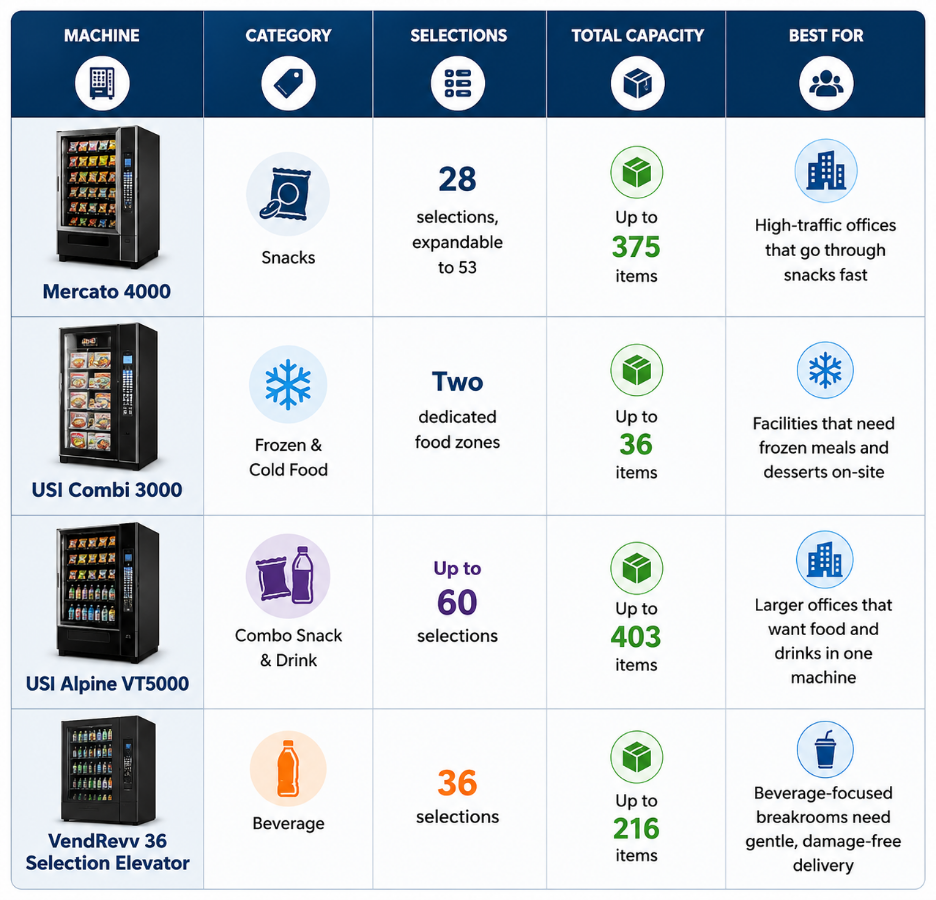
A combo unit like the Pico Cooler Vision | 365 Retail Market, installed by FreshVendCLT, is a good example: it offers up to 60 selections and a 403-item capacity, all running on cashless payment technology so customers can tap a card or phone instead of hunting for change.
As an automated retail solution, this kind of machine also tracks sales in real time, accepts multiple payment methods, and helps operators spot which selections need restocking before they actually sell out.
How Do Smart Vending Machines Work?
Smart vending machines operate through a combination of hardware and cloud-connected software. These digital vending solutions use real-time data to streamline operations and improve the customer experience.
The following is an overview of how the smart machine operates:
Connectivity – This feature enables the machine to connect to Wi-Fi and cellular connections to communicate with the remote management system.
Payment processing – Cash, credit/debit cards, mobile payments, and QR codes are accepted by an integrated cashless payment terminal.
Inventory sensors – Real-time inventory is measured by means of weight and infrared sensors.
Data transmission – Sales, inventory, and other data are transmitted to the remote dashboard.
Remote management – Machine pricing, performance, and restocking are done through remote management features.
These interconnected systems are what make vending machine technology genuinely "smart," since none of it depends on someone guessing when a machine needs attention.
For instance, the VendRevv 36 Selection Elevator, one of the machines FreshVendCLT installs for beverage-focused breakrooms, relies on exactly this kind of connected system, using sensors and remote monitoring to stay stocked across its 216-item capacity without daily manual checks.
Smart Vending Machine Comparison at a Glance
Small perks add up in how employees rate a job. A stocked break room with real food options signals that a company cares about employees' daily comfort, along with the bigger benefits listed in an offer letter.
Employee perks like this don't require a large budget, since the setup and stocking cost the employer nothing.
Investing in company breakroom services also reduces employee internal complaints. Nobody has to field grievances about an empty machine or manage a snack budget, because the provider tracks what's selling and restocks accordingly.
Comparing FreshVendCLT’s Vending Options
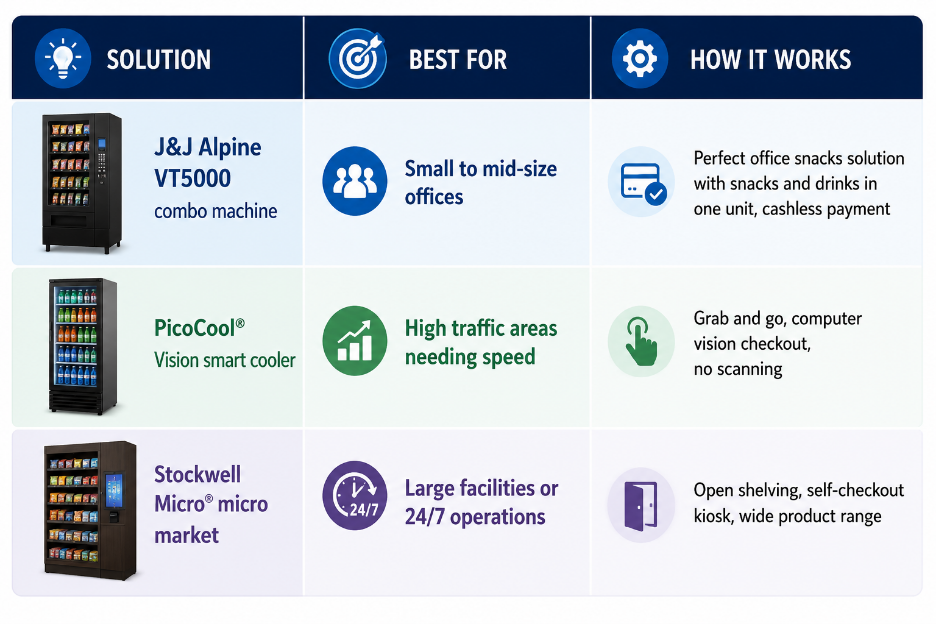
Which Vending Machine Is Right for Your Business?
The shift from traditional to smart vending machines reflects a bigger trend: automating retail through connected technology that removes guesswork for both the business and the customer. Fewer stock-outs, faster checkout, and real sales data all add up to a stronger return than a coin-operated machine can offer on its own.
If you want to move your vending operations into the future by cutting manual work and boosting sales with cashless vending machines, now is a good time to look at digital options. FreshVendCLT installs and tailors smart vending setups, from the snack-focused Mercato 4000 to the combo Pico Cooler Vision | 365 Retail Market, for businesses that want less hassle and better results.
Ready to upgrade your vending setup?
Contact us today to see how a smart vending machine can transform your operations and maximize your revenue.
FAQs
1. What is a smart vending machine?
A smart vending machine is an internet-connected machine that uses digital technology, cashless payments, and real-time inventory management.
We at FreshVendCLT offer smart vending solutions that make it easier for businesses to monitor inventory, streamline operations, and improve the customer experience.
2. What is a traditional vending machine?
Traditional vending machines are basic units that dispense goods in return for cash, without an internet connection or the capability for remote monitoring or cashless payments.
3. How are smart vending machines different from traditional vending machines?
Smart vending machines feature cashless payments, remote inventory management and analysis, while traditional vending machines require manual stock replenishment and accept only cash, with no connectivity.
4. Do smart vending machines accept digital payments?
Yes, smart vending machines are usually designed to be cashless, supporting credit/debit cards, mobile wallets, QR code payments, and cash.
5. What technology is used in smart vending machines?
Technologies such as IoT connectivity, cloud software, touchscreens, inventory sensors, and cashless payment terminals are used in vending machines.
6. Are smart vending machines more expensive than traditional vending machines?
The initial price of smart vending machines might be higher due to the technology they use, but they often cost less in the long term.